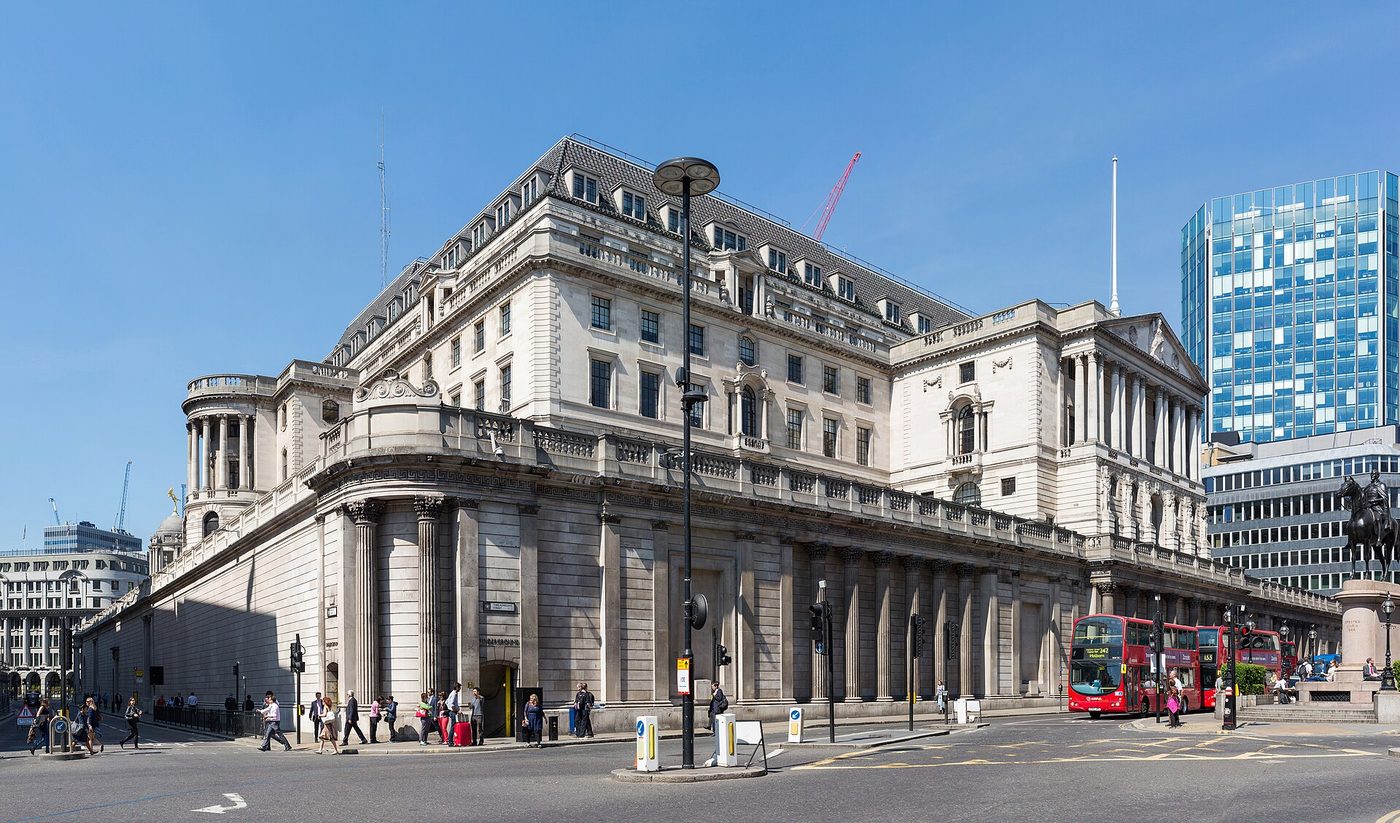
Bank of England raises rate to 4 percent
The Bank of England raised Bank Rate by 0.25 percentage points to 4%, the first increase in more than three years, BBC News, the Guardian and RTE report. The Monetary Policy Committee voted 8-1, citing energy prices and inflation risks. One member preferred a larger half-point rise.
The Bank of England raised Bank Rate to 4% from 3.75%, the first increase in more than three years, BBC News, the Guardian and RTE report. The move aims to curb inflation driven largely by higher energy prices tied to the Middle East conflict, the outlets say.
The Monetary Policy Committee voted 8-1 for the quarter-point rise, according to the Bank's November 2026 Monetary Policy Summary. One member voted for a 0.5-point increase to 4.25%. The Guardian identifies that dissenter as Catherine Mann.
Governor Andrew Bailey said higher energy prices warranted the hike and that the path of the Iran-related conflict remains central to future decisions, BBC News and RTE report. Bailey said he could see the argument for a further rise if energy pressures persist, BBC News says.
UK CPI inflation was 3.5% in the year to September 2026, largely on higher fuel prices, BBC News reports. The Bank's summary says inflation is expected to rise further before easing, with limited evidence so far of broader wage and price spillover beyond energy.
Bailey welcomed a recent drop in energy prices but said it would need to be sustained to change the outlook, the Guardian reports. The Bank said the chancellor's budget measures would shave a little from near-term inflation, the Guardian says. Millions of households still face higher energy bills into the new year, BBC News notes.
What we know: Bank Rate is 4% after an 8-1 vote, the first rise in more than three years.
What we don't: Whether the committee will hike again at the next meeting.
Where outlets agree BBC News, the Guardian, RTE and the Bank of England report an 8-1 vote to raise Bank Rate to 4%.
Where they differ The cited reports agree on the key facts so far.