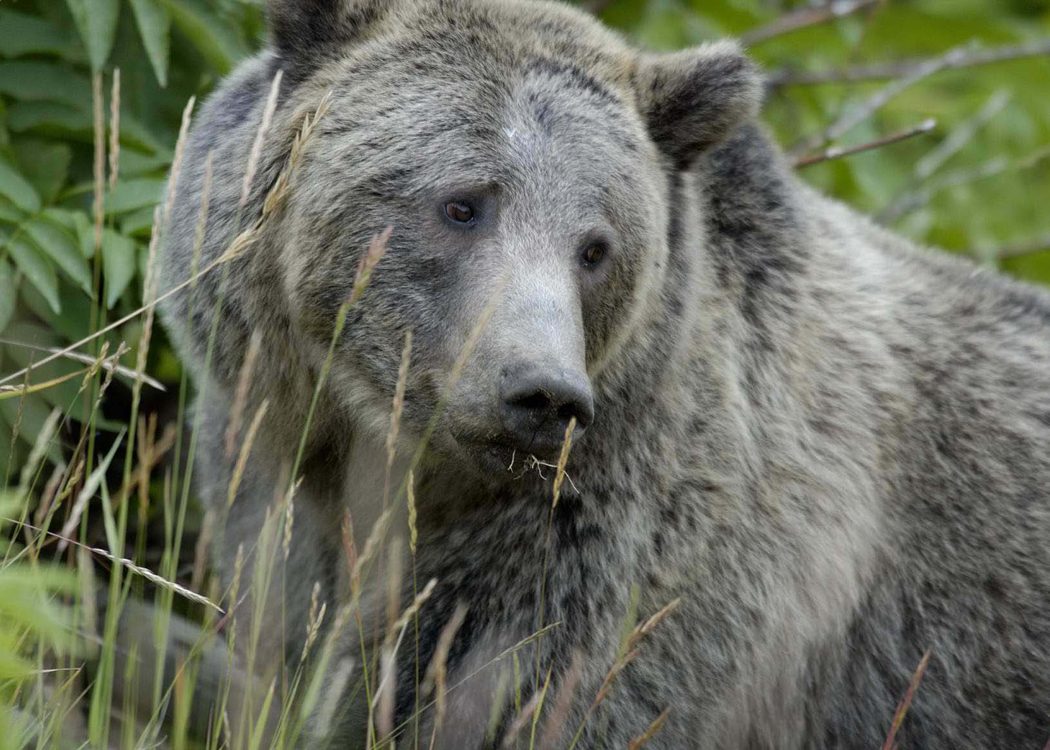
DNA links grizzly sow and cubs to Bella Coola deaths
AP and CBC report that DNA tests linked a female grizzly and her three cubs to the deaths of a mother and daughter near Bella Coola, in British Columbia. Officials said the attack was likely predatory. All four bears were killed.
AP and CBC report that DNA tests have linked a female grizzly and her three cubs to the deaths of a mother and her adult daughter near Bella Coola, in British Columbia. The British Columbia Conservation Officer Service said the four bears were killed to protect the public. Inspector Jeff Tyre said Tuesday that the attack likely involved predatory behavior, which he described as very rare. “That is to say, we don’t know how it started, but we know how it ended,” Tyre said, according to AP.
AP identifies the victims as Jenny Balcarras, 48, and her 20-year-old daughter, Selah Reed. CBC identifies the mother as Jennifer Balcarras and also names Reed, 20. CBC, citing family members, says they had been hiking on the Snooka West Trail on October 31 and did not return. AP says family members raised the alarm after Reed missed a routine Saturday-night call with her sister. CBC says Balcarras’s remains were found on November 2. Reed’s remains were found about 150 meters away the next day, CBC reports. AP also reports that the remains were found about 150 meters apart near a trail outside Bella Coola. It says Reed’s remains were in a bear cache.
Tyre said the four bears were not involved in a separate grizzly attack in the same area in November 2025, AP and CBC report. AP says that earlier attack injured 11 people in a group of about 20 elementary school students and teachers, including two critically. CBC says the bear responsible for that attack was never found. Tlhmtimut Samuel Schooner is the elected chief councillor of the Nuxalk Nation. He said the latest killings have been deeply unsettling, as the community is still recovering from last year’s attack. Local authorities imposed a voluntary curfew, and children have been escorted to school.
CBC says the Conservation Officer Service has concluded its investigation into this month’s attack and has removed its trapping equipment. Tyre said more than a dozen officers worked to track the bears, often in difficult terrain and weather. He said bears involved in fatal attacks cannot be rehabilitated or relocated because they pose an extreme risk to public safety, according to AP. “We hope the efforts of everyone who responded, as well as these findings, bring some measure of closure,” Tyre said, according to CBC.
Where outlets agree AP and CBC report that DNA tests linked a female grizzly and her three cubs to the Bella Coola deaths, and that officials said the attack was likely predatory.
Where they differ AP identifies the mother as Jenny Balcarras, while CBC identifies her as Jennifer Balcarras, and CBC uniquely reports the October 31 hike and the November 2 and 3 discovery dates.