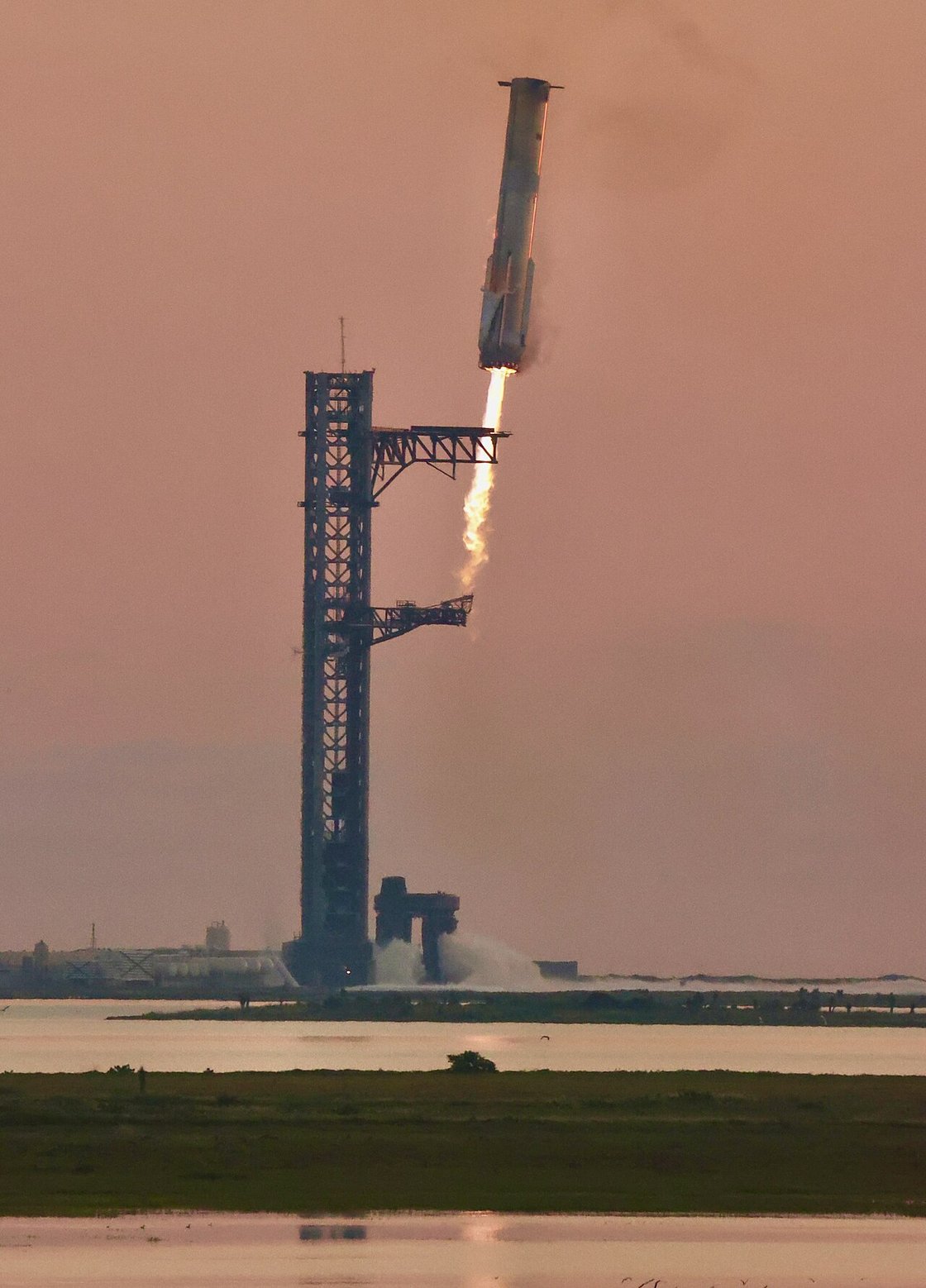
SpaceX catches Starship upper stage with tower arms for first time
SpaceX caught the upper stage of its Starship rocket with its launch tower's arms on Saturday, the BBC, Space.com and CNBC report. It was the first catch of that part of the rocket. The booster missed its own catch on Friday and exploded over the Gulf of Mexico.
SpaceX caught the upper stage of its Starship rocket with its launch tower's arms on Saturday, the BBC, Space.com and CNBC report. It was the first catch of that part of the rocket, which SpaceX calls Ship. The flight lasted about 22 and a half hours, the BBC says.
The Ship, known as Ship 42, came down through the clouds at Starbase in Texas on Saturday afternoon, Space.com reports. Many SpaceX workers went outside to watch it settle into the arms of the tower, which the company calls "Mechazilla."
The plan was to catch the two parts of the rocket on the same flight. But the Super Heavy booster set off an automated abort a few minutes after Friday's launch, the BBC reports. It flew out over the water instead and exploded. Elon Musk later posted on X that the booster was "slightly low on fuel," the BBC says.
The Ship went on to orbit the Earth 14 times, CNBC reports. It also released 26 Starlink internet satellites.
"We caught a Starship, and now everything changes," SpaceX's Dan Huot said on the company's webcast, according to Space.com. Space.com also quoted SpaceX's Jessie Anderson, who called it "one of the most incredible and historic engineering feats of all time."
Professor Malcolm Macdonald, president of the Royal Aeronautical Society, weighed both parts of the flight. "Not recovering the first stage is a setback," he said, according to the BBC. "But they have recovered Super Heavy before and so successfully returning and recovering the Ship, is a substantial step forward."
"The next milestone would be stitching those achievements together and then proving they can do it reliably, repeatedly and economically," Macdonald said.
SpaceX had caught the booster on three earlier test flights, the BBC and Space.com report. The upper stage first reached orbit in September, the BBC says. SpaceX needs to recover the two parts reliably to fly them again and cut costs. SpaceX also has a NASA contract to turn the Ship into a Moon lander, the BBC reports.
What we know: SpaceX caught its Starship upper stage with its launch tower on Saturday, a first. The booster was lost on Friday. What we don't know: When SpaceX will try to catch the two parts on one flight.
Where outlets agree The BBC, Space.com and CNBC report that SpaceX caught the Starship upper stage with its launch tower's arms on Saturday after the booster was lost over the Gulf of Mexico on Friday.
Where they differ The cited reports agree on the key facts so far.