Webb telescope finds ice older than the star it orbits
According to Ars Technica, the James Webb Space Telescope found water and carbon dioxide ice in the dusty disk around the young star Beta Pictoris. The ice likely formed in interstellar space before the star's planets, researchers concluded. Their study appeared in Science.
According to Ars Technica, the James Webb Space Telescope found water and carbon dioxide ice in the dusty disk around the young star Beta Pictoris. The ice likely formed in interstellar space before the star's planets, researchers concluded. Their study appeared in Science.
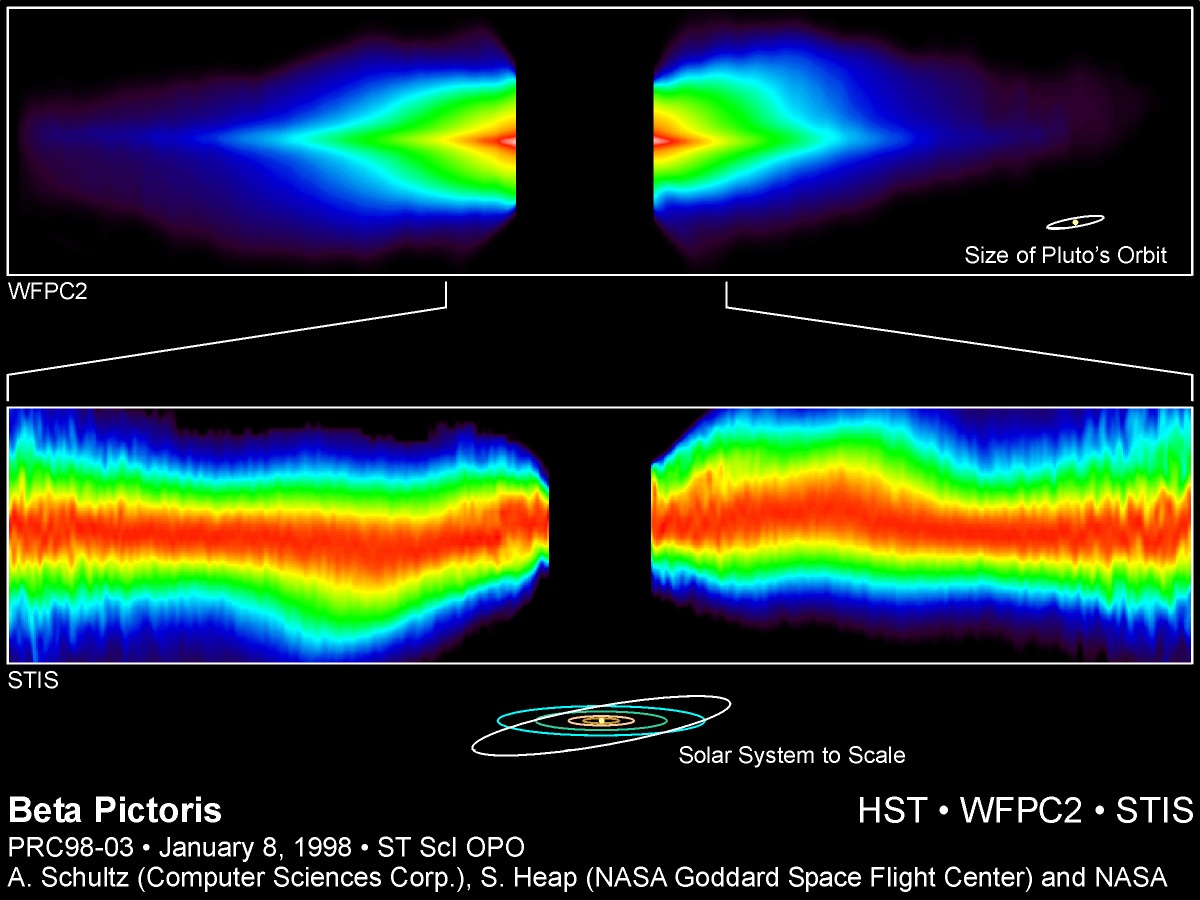
Beta Pictoris is about 20 million years old and about 64 light-years from Earth, Ars Technica reports. It is surrounded by a vast disk of dust and rubble where planets are still forming. Astronomers have already found three planets there.
A team led by Sarah Betti, an astronomer at the Space Telescope Science Institute in Baltimore, used Webb's Near Infrared Spectrograph to look for ice, Ars says. Earlier searches for water in the disk had failed.
The water ice is glassy rather than crystalline, and it is mixed with carbon dioxide in about the same proportions seen in comets in our own solar system, Ars Technica reports. The team estimates that less than 7 percent of the water ice is crystalline. That was surprising, because models predicted ice in such disks would mostly be crystalline.
Carbon dioxide makes up about 11 percent of the ice, Ars says. That falls within the range measured in solar system comets. It suggests the ices of Beta Pictoris may have formed the same way as ours, on dust grains in cold, dense clouds early in star formation.
The ice is spread evenly across the disk, which the team argues requires frequent collisions among small bodies called planetesimals that release fresh icy dust, Ars Technica reports. If a young system 64 light-years away started with the same icy ingredients as ours, the raw materials for water-rich worlds might be common, Ars says.
Only Ars Technica has reported this so far; NewsHabit hasn't seen independent confirmation.
What we know: Webb detected glassy water ice mixed with carbon dioxide around Beta Pictoris, and researchers concluded it likely formed in interstellar space, Ars Technica reports. What we don't know: Exactly how much crystalline ice is present, and whether another outlet will independently report the study.
Where outlets agree Ars Technica reports that the James Webb Space Telescope detected water and carbon dioxide ice around Beta Pictoris that likely formed before the star's planets.
Where they differ The study in Science is the basis of the Ars Technica report, which does not include comment from outside astronomers.