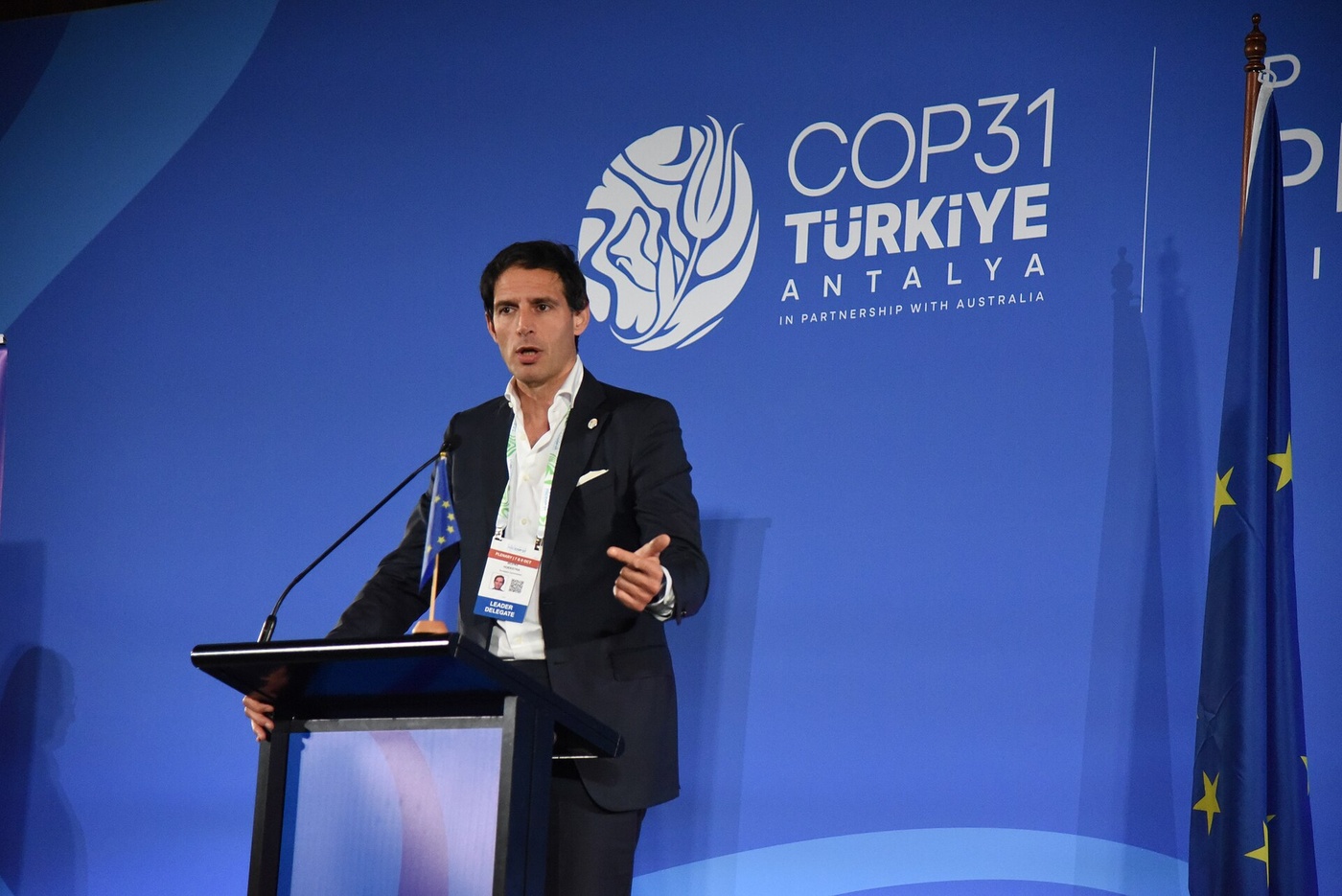
EU calls draft COP31 climate deal a 'shopping list'
The European Union's climate chief called the first draft of a COP31 climate deal a "shopping list," The Guardian and Climate Home News report. He backed its goal of getting 35% of the world's energy from electricity by 2035. The draft is likely to change.
The European Union's climate chief called the first draft of a COP31 climate deal a "shopping list," The Guardian and Climate Home News report. He backed its goal of getting 35% of the world's energy from electricity by 2035. The draft is likely to change.
Wopke Hoekstra, the EU's climate commissioner, objected to the draft's language on finance, trade and carbon capture, The Guardian reports. "It had the characteristics of a shopping list," he said, according to The Guardian. He said the text does not go in the right direction and needs significant change, the paper reports.
The main decision at the talks should focus on delivering goals countries have already agreed, rather than on new ones, Hoekstra said, Climate Home News reports.
Hoekstra backed the push to get 35% of global final energy from electricity by 2035, The Guardian and Climate Home News report. "The more, the better. The quicker, the better. The cleaner, the better," he said, according to The Guardian. He said the EU could be flexible on how clean that power must be, The Guardian says.
Other governments went further. At a meeting of delegation heads on Monday, the Arab Group and Russia rejected the draft outright, according to the Earth Negotiations Bulletin, which unlike the media is allowed into the room. The Like-Minded Developing Countries, a group that includes China, India and Saudi Arabia, said the draft crosses their red lines, the bulletin reports.
The 18-page draft came out on Monday and is far from set in stone, The Guardian reports.
Denmark became the fifth country to unveil a national plan to move away from fossil fuels, Climate Home News reports. Spain, Portugal, Ireland, Luxembourg and the Pacific islands have also promised plans, it says. Arab states led by Saudi Arabia, the Like-Minded group and Russia oppose putting such voluntary roadmaps into the formal outcome, Climate Home reports.
What we know: The EU says the first COP31 draft needs significant change but backs its goal of getting 35% of energy from electricity by 2035. What we don't know: What the next draft will say and whether all countries can agree on a final deal.
Where outlets agree The Guardian and Climate Home News report that EU climate commissioner Wopke Hoekstra called the draft a "shopping list" and backed its 35% electrification goal.
Where they differ The cited reports agree on the key facts so far.