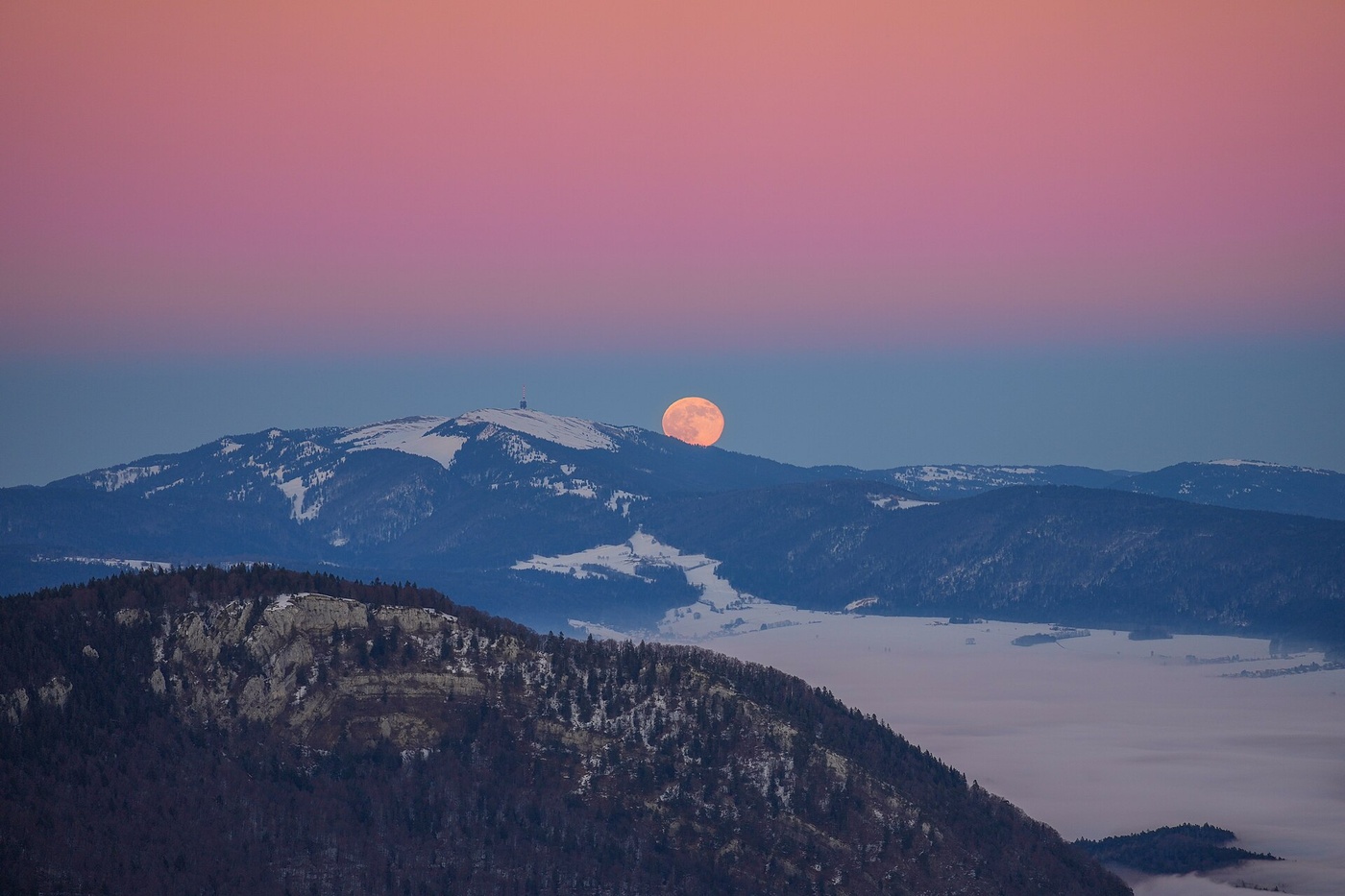
Beaver Moon rises this week, first of a run of supermoons
November's full moon, the Beaver Moon, is a supermoon that rises in the east on Tuesday, Nov 24. It is the first in a run of supermoons, Live Science and BBC Sky at Night Magazine report. The best time to see it is at moonrise, around sunset.
November's full moon, the Beaver Moon, is a supermoon that rises in the east on Tuesday, Nov 24. It is the first in a run of supermoons, Live Science and BBC Sky at Night Magazine report. The best time to see it is at moonrise, around sunset.
The moon reaches its full phase on Tuesday while it is below the horizon in North America, Live Science reports. The best view comes at moonrise, when it rises in the east around the same time the sun sets, the outlet says. Sky at Night Magazine says the best times to watch it rise are Monday, Nov 23, and Tuesday, Nov 24. The moon will look full on Monday and Wednesday as well, Live Science says.
A supermoon happens when a full moon comes near perigee, its closest point to Earth, Live Science and Sky at Night report. At full moon, it will be about 360,765 kilometers away, closer than its average of 384,400 kilometers, Sky at Night says. A supermoon can look up to 14% larger and 30% brighter than the farthest full moon, but the difference from an average full moon cannot be seen with the naked eye, the magazine says.
This is the smallest supermoon of the run, the outlets report. December's full Cold Moon, dubbed the Christmas Eve supermoon, will be the biggest full moon of 2026, Live Science and Sky at Night report. Live Science says it will be the closest full moon since 2018.
The name comes from the time of year when beavers build dams and prepare for winter, the outlets report. Other nicknames include the Frost Moon and the Snow Moon, Live Science says. Sky at Night notes that November was also when beavers were hunted for their pelts, nearly to extinction.
No telescope is needed, Sky at Night says. A clear view to the east helps, and the low moon can look giant and orange next to trees and buildings, the magazine says. On Nov 23, the Pleiades and Hyades star clusters sit near the moon, it adds.
What we know: The Beaver Moon is a supermoon that rises on Tuesday, Nov 24. What we don't know: Whether clouds will block the view in any given area.
Where outlets agree Live Science and BBC Sky at Night Magazine report that the Beaver Moon is a supermoon that is full on Tuesday, Nov 24.
Where they differ The cited reports agree on the key facts so far.